Empowering Women Through Food, Digital Skills, and Citizenship
The SOUL-FOOD Project has successfully completed the piloting phase of its training curriculum, marking an important step in developing its educational resources for migrant women. This phase allowed project partners to test the curriculum in practice, assess its relevance and accessibility, and gather valuable feedback from participants and facilitators.
The pilot sessions were conducted with small groups and focused on integrating culinary learning, digital competencies, and citizenship education. The piloting consisted of 9 sessions of 5 hours each, creating enough time for participants to engage meaningfully with the training through practical exercises, discussion, and interactive learning. This interdisciplinary approach reflects the project’s aim to provide practical, inclusive, and empowering learning opportunities that respond to the everyday realities of the target group.
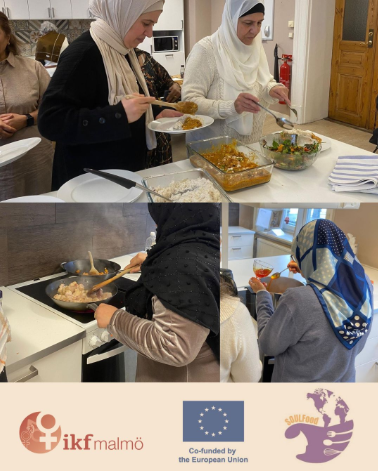
The piloting process offered an opportunity to evaluate how the modules function in real learning environments, including the clarity of content, the usability of the materials, the effectiveness of the activities, and the overall learning experience. Feedback collected during this stage will support the further refinement of the curriculum before its wider implementation.
Preliminary observations from the piloting phase indicate that participants responded positively to the practical and interactive nature of the training. The combination of digital skills, communication, food-related knowledge, and civic learning contributed to a more holistic educational experience, supporting both personal development and social inclusion.An important element of the pilot was its participatory dimension. Participants were encouraged to reflect on the content and share their perspectives, allowing the project consortium to identify strengths, challenges, and opportunities for improvement. This ensures that the final curriculum will be better aligned with the needs, experiences, and expectations of the women it is intended to support.
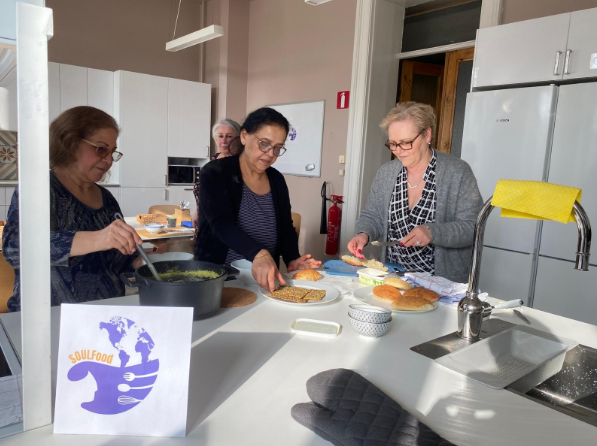
Following the completion of the pilot phase, the consortium will now review the findings and make the necessary adjustments to strengthen the curriculum’s quality, inclusiveness, and sustainability. This process will contribute to the creation of a final training programme that is both practical and adaptable across different contexts.
The piloting phase has confirmed the relevance of the SOUL-FOOD approach, demonstrating that combining food, digital literacy, and citizenship education can create meaningful pathways to empowerment, participation, and community engagement.
“The piloting phase has been essential in helping us transform the curriculum into a more effective and responsive learning tool for women.”
– Internationella Kvinnoföreningen i Malmö